
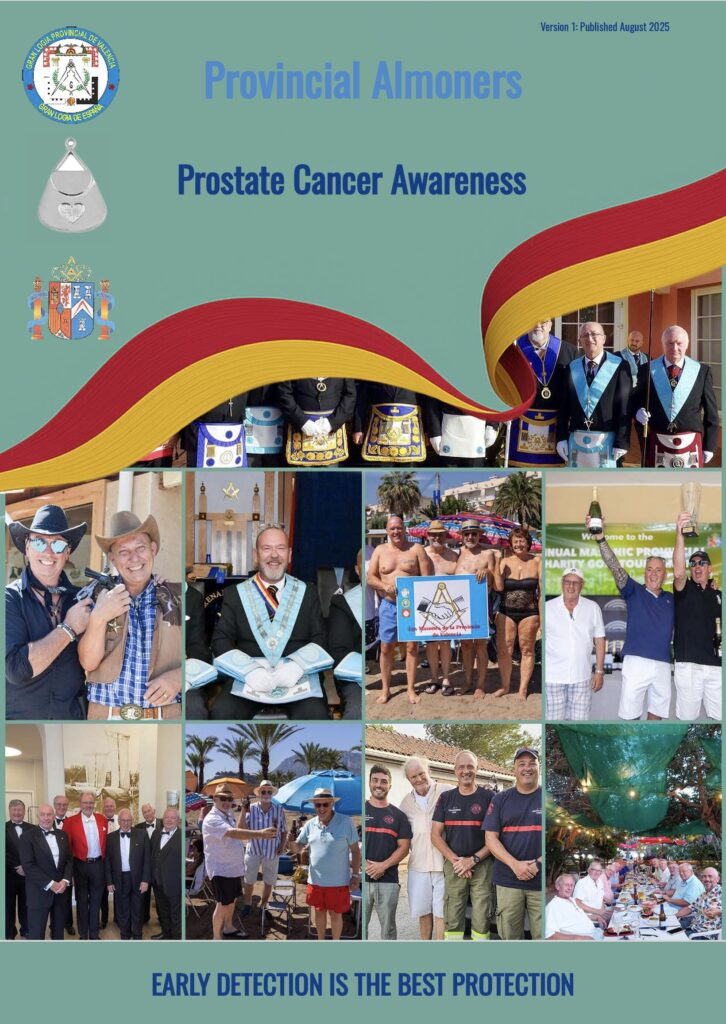
Prostate Cancer and the Importance of Risk-Based Testing for Older Men
Prostate cancer is the most common form of cancer among men in England, with cases surging by 25 per cent between 2019 and 2023 and claiming a life every 45 minutes despite its high curability when caught early. As in many countries, Spain and the UK lack a formal screening programme, leaving many older men at risk of late diagnosis and advanced disease.
Understanding the Stakes for Older Men
Many of us in the Masonic community find ourselves entering the age bracket where prostate cancer incidence climbs steeply. In the UK alone, on average, more than 55,000 men are diagnosed annually, and over 12,000 die of prostate cancer—making it the second most common cause of cancer death in men.
Globally, prostate cancer ranks as the second most common male cancer, with new cases set to approach three million annually by 2040 and mortality rising by 85 per cent if no action is taken.
Why early testing matters
A one-size-fits-all approach to prostate cancer testing has drawbacks. Traditional PSA (prostate-specific antigen) blood tests can detect elevated protein levels, but they miss some cancers and generate false positives that lead to unnecessary biopsies and treatment. That’s why recent UK research is focusing on classifying men by individual risk—using age, family history, ethnicity and, in the future, emerging genetic tools—to target testing where it will have the most impact.
• Brethren aged 50 and over should consult their doctor and consider a PSA or other test; those aged 45 and over who are Black or have a family history of prostate cancer are strongly advised to discuss testing sooner.
• In the UK, one in five men present with incurable, advanced disease compared to under one in ten in countries with formal screening programmes such as the United States—largely thanks to routine PSA testing.
• Socio-economic and educational disparities mean that affluent, health-literate men are more likely to seek testing, while many others slip through the net simply due to lack of awareness or inconsistent advice from doctors.
Practical Steps for Masons
The Provincial Almoners team has produced a Factsheet which provides information on Prostate Cancer, the different tests available and signposts to where brethren can seek individual advice on their risk and the different tests available to them.
1. Know your baseline risk: consider age, ethnicity and family history.
2. Discuss testing with your doctor once you turn 50, or at 45 if you’re Black or have affected relatives.
3. Keep abreast of developing work on Prostate Cancer.
4. Use the strength of our fraternity: share experiences and encourage one another to take proactive steps.
Looking Ahead
By staying informed and supporting one another, we can help ensure that prostate cancer is caught early—when it is most treatable—and safeguard the health of our brethren for years to come.
REMEMBER – EARLY DETECTION IS YOUR BEST PROTECTION