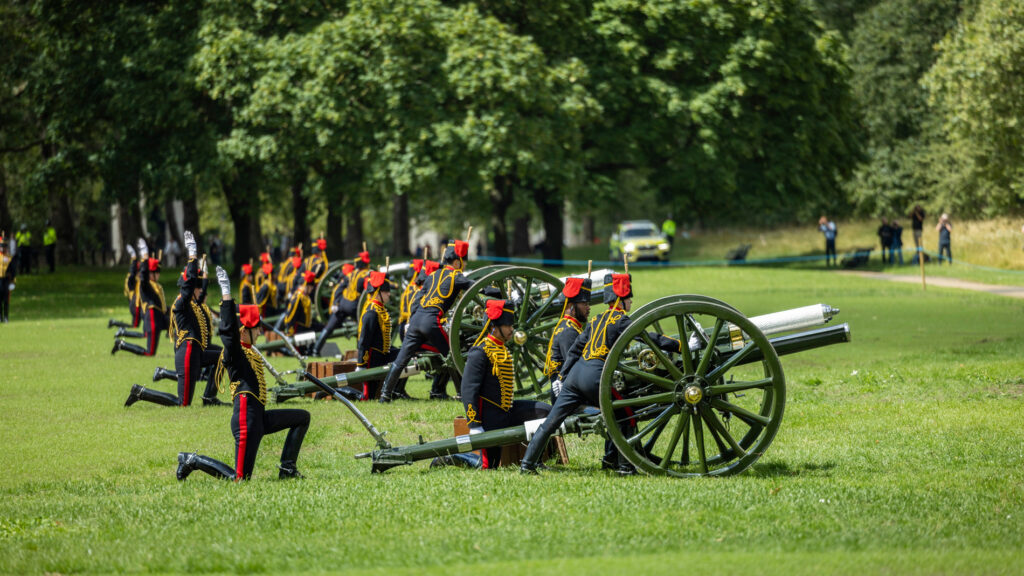
A military 21 gun salute
The custom of Masonic Fire has long been a distinctive feature of the festive board, used to conclude toasts with ceremony, rhythm, and a sense of unity. Its origins lie in the mid‑eighteenth century, when Brethren would bring their glasses down sharply upon the table in unison, producing a sound likened to musket or cannon fire. This emphatic gesture was intended to honour the subject of the toast and to demonstrate collective harmony.
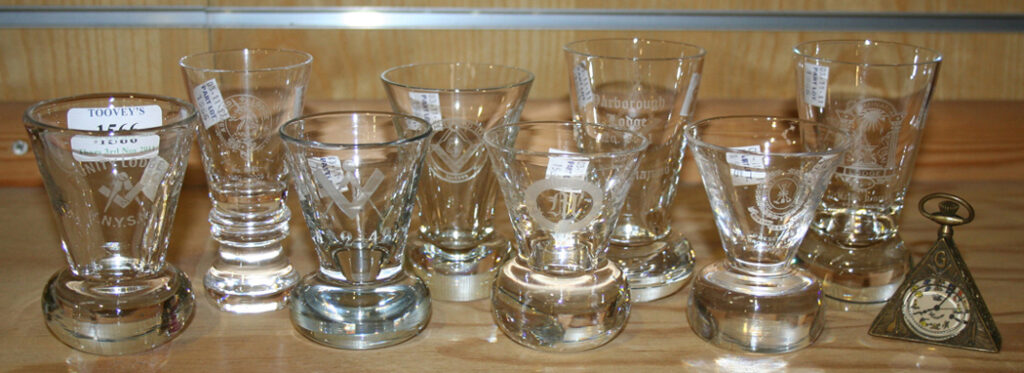
Vintage Masonic Firing Glasses
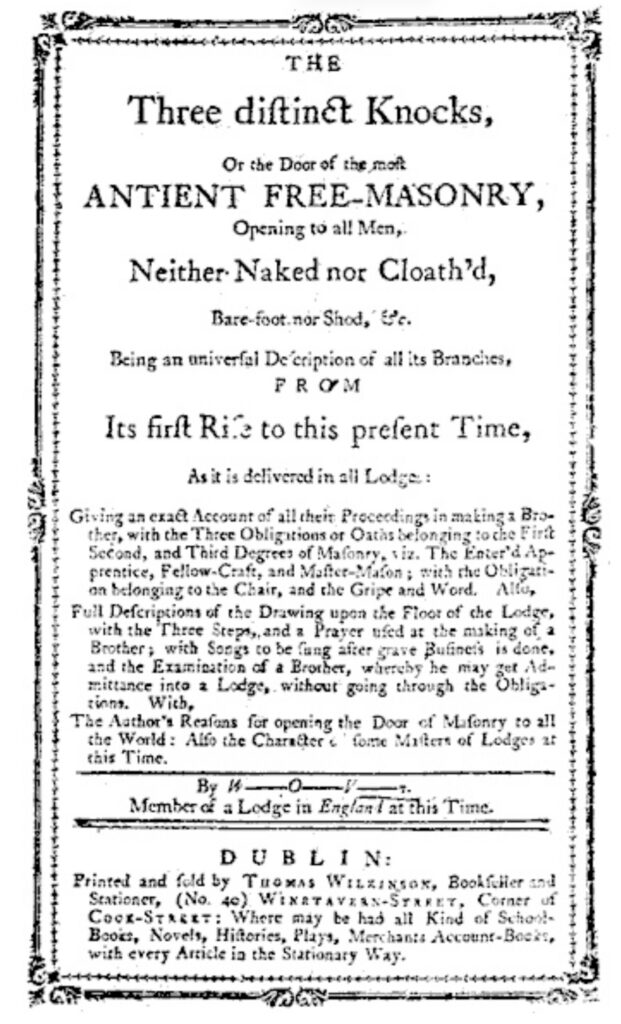
”Three Distinct Knocks” – an English exposure – c1760
The earliest detailed accounts appear in the 1760s in anti-Masonic texts, such as the “Three Distinct Knocks”, commonly known as the “English exposures”, which describe the sequence of drinking, setting down the glass, and clapping in rhythm. French Masonic exposures of the same period also record similar practices, often with elaborate descriptions of rhythmic clapping and gestures. These continental references suggest that the tradition was widely known and may have developed in parallel across Masonic cultures, with local variations in form and symbolism.
The pattern of “three times three” – nine in total – soon became the most common form, reflecting the symbolic importance of the number three within Freemasonry. In some Lodges, this was extended to “seven times three”, producing twenty‑one claps in total. This sequence was often compared to the 21‑gun salute, the highest military honour rendered to sovereigns and heads of state. Just as the artillery salute symbolised respect and loyalty in the civic and military sphere, so too did the twenty‑one “fires” within the Lodge symbolise the highest honour that could be paid in a Masonic context.
The association with military Lodges, particularly those connected with Artillery regiments, reinforced this martial imagery. In such settings, the terminology of “firing” was especially apt, and the ritualised clapping or striking of glasses echoed the drills and salutes of the parade ground. “Regimental Fire” and became a recognised form, marked by disciplined rhythm and martial symbolism, further strengthening the link between Masonic fellowship and military tradition.
In modern times, the phrase “Brethren, Quick Fire” has generally been preferred over “Good fire” as it more accurately reflects the military connections associated with the practice.
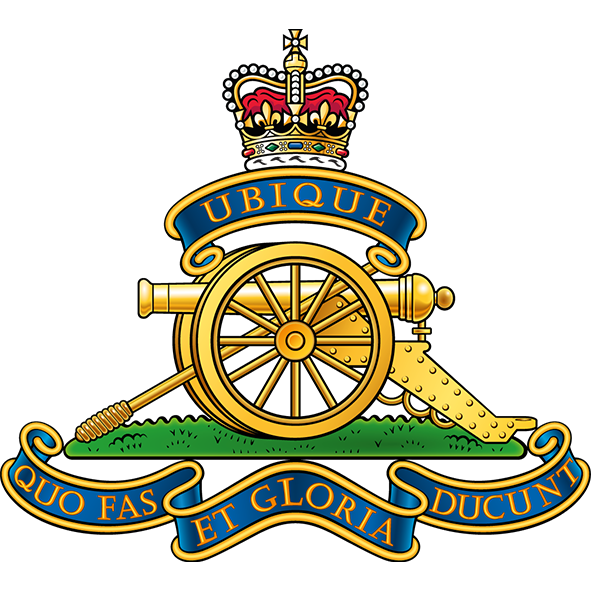
The Badge of the Royal Regiment of Artillery
Another distinctive development was the practice of “Point Left Right” (PLR), where Brethren extend their arms alternately to the left and right before clapping. This gesture, which appears in French exposures of the eighteenth century, was described as symbolising the spreading of goodwill and harmony in all directions. Over time, it became incorporated into English practice as well, particularly in Lodges that valued a more elaborate and symbolic form of Fire. Today, PLR remains a familiar element in many Lodges, often performed before each set of claps in the “three times three” sequence.
Other variations also developed, including “Running Fire”, where the sound travelled around the table in sequence, and “Silent Fire”, a muted form often reserved for solemn occasions or toasts to absent Brethren. Regional customs such as the nineteenth‑century Kentish Fire – a distinctive pattern of rhythmic clapping popular in political and social gatherings – were also adopted in some Lodges.
What emerges from the historical record is that there has never been a single, universally accepted form of Masonic Fire. Each Lodge, Province, and country has developed its own variations, shaped by local custom, military influence, and cultural exchange. Yet the underlying purpose has remained constant: to honour the subject of the toast with a collective act of enthusiasm, fellowship, and symbolic unity.
In modern times, the practice is generally more restrained, with hand clapping replacing the once‑boisterous crashing of glasses. Nevertheless, it continues to serve as a distinctive and memorable feature of the festive board, linking contemporary Brethren with the traditions of their predecessors, and echoing the same spirit of respect and honour embodied in the 21‑gun salute.
R.W. Bro. Rodney Charles Bignell – Provincial Grandmaster of Valencia